(Image source from: Indiatoday.in)
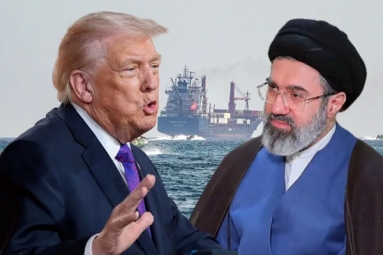
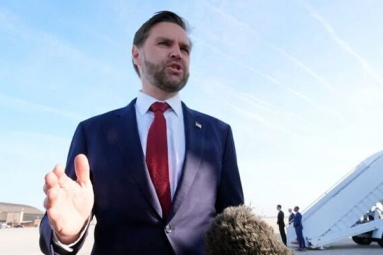
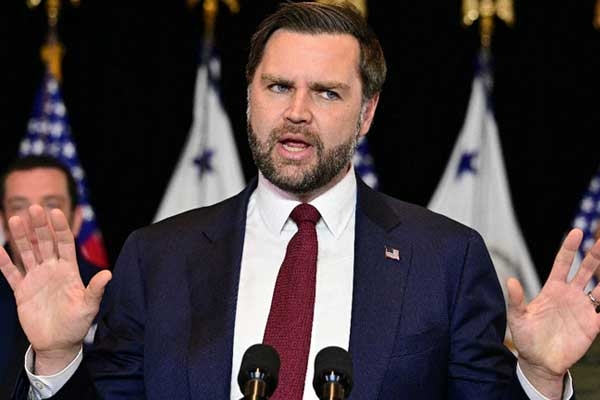
Vice President JD Vance has shown himself to be quite hesitant when it comes to supporting Washington's decision to engage in conflict with Iran. After six weeks, he now finds himself in Islamabad, getting ready to hold discussions with high-ranking Iranian officials aimed at ending a war that has created significant disruptions in the global economy. Reports indicate that Vance was chosen to lead these discussions because Tehran preferred him for this role. Some of Iran's leaders viewed Vance as a suitable candidate for the negotiations. According to the news agency Reuters, various officials in Iran specifically wanted him involved in the talks. They believe that Vance is one of the most anti-war figures among President Donald Trump's close advisors, which has led Tehran to feel that he is the best option for negotiation among Trump’s representatives. Vance is set to meet Iran’s Parliament Speaker Mohammad Bagher Ghalibaf and Foreign Minister Seyed Abbas Araghchi soon, marking a significant occasion as it represents the highest-level in-person discussions between Washington and Tehran since 1979. He will be joined by special envoy Steve Witkoff and Jared Kushner, Trump's son-in-law.
It remains unclear if they will shake hands due to the complicated history between the two nations, but the leaders are anticipated to refrain from making a situation that's already costly for the global economy any worse. The US team has a careful mix of authority and flexibility in negotiations, with Vance bringing critical political influence necessary for discussions like these. His presence is particularly important because he is viewed as a possible peace negotiator for Iran. The same cannot be said for Witkoff and Kushner, as previous failed talks have created mistrust among the Iranians. Officials there blame the two for the failure of earlier negotiations, thinking they preferred military action over diplomacy. Vance is perceived as less inclined towards promoting war and more focused on seeking an end to it. Those in Iran believe he is a more reasonable negotiator, as his past doubts about military actions have led them to think he would work toward finding a resolution. According to the NY Times, the Vice President is also the most vocal critic of the very administration he is part of.
These discussions are happening during a fragile two-week ceasefire, providing a rare moment of tranquility in the conflict-affected Middle East. If the talks are successful, it might boost Vice President Vance's popularity, positioning him as a leading candidate for the 2028 Republican presidential nomination, according to analysts. However, there is also the risk of him being associated with a conflict that has resulted in numerous civilian casualties and has contributed to rising inflation and gas prices.